Self-funded
Fees are paid in full by the resident (or their family) from savings, income, pensions or investments. Free Personal and Nursing Care contributions still apply once assessed as eligible.
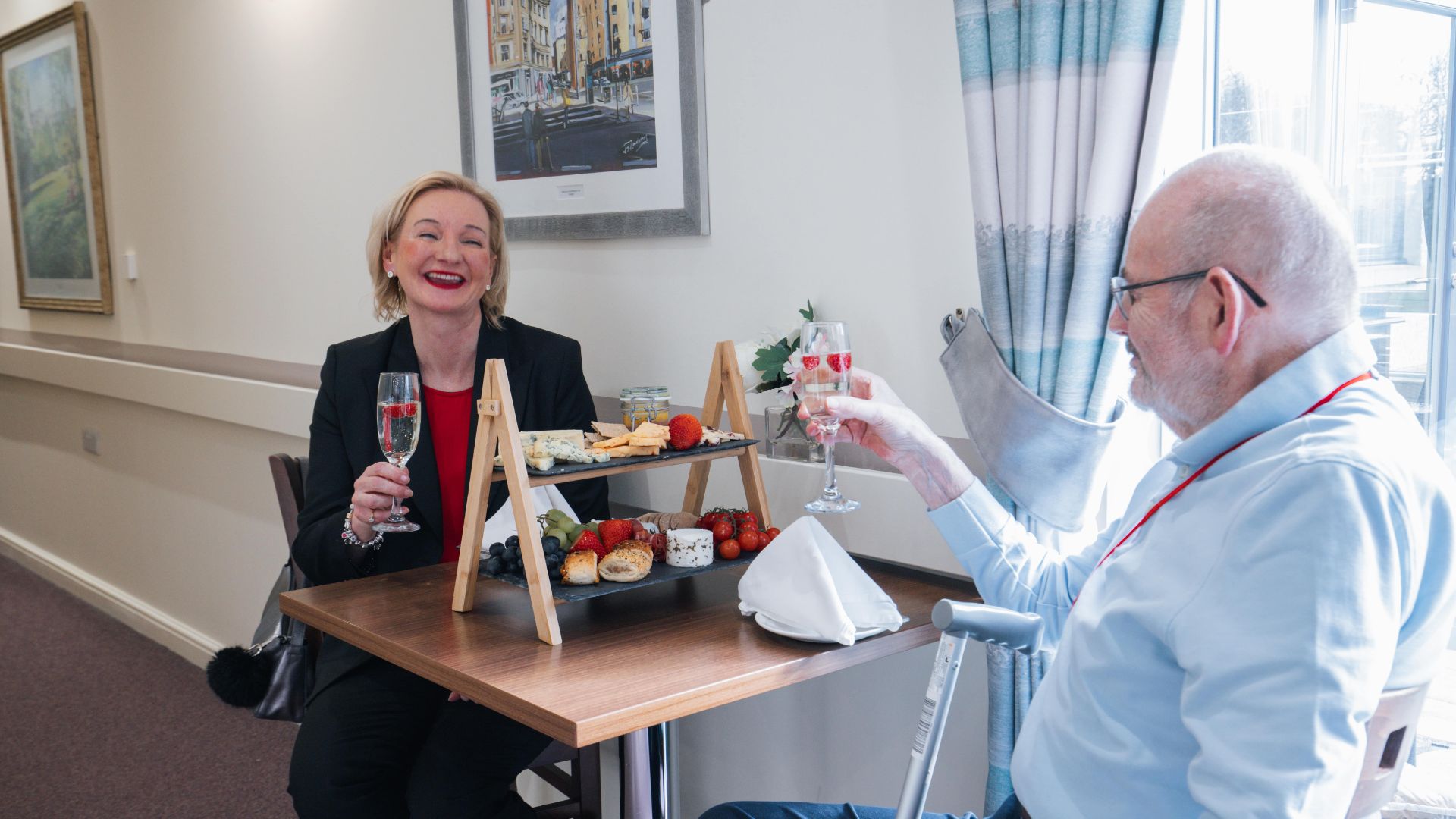
Care home funding in Scotland
A calm, plain-English guide to the funding routes, rules and figures that shape care-home fees in Scotland - and where to turn for regulated advice.
Funding a care home should feel less like a maze and more like a considered decision.
This page brings together the main ways people pay for a care home in Scotland - self-funding, local authority support, Free Personal and Nursing Care, NHS-funded care and top-ups - along with the current thresholds and the practical steps families take. It is general information, not regulated financial advice.
Care home funding covers the total weekly cost of someone living in a residential or nursing home. That fee can be paid in full by the resident, in full or in part by their local authority, in full by the NHS in specific circumstances, or - most commonly - through a mix of the above.
In Scotland the picture is shaped by two things working together: how a person is assessed to have care needs (a care needs assessment led by the local authority), and how they are assessed financially (their income, capital and property). The two assessments run in parallel and both influence how the fee is met.
Every family we speak to is starting from a different place - some know exactly what they need, others are gathering information for the first time. Wherever you are on that journey, our team can walk you through it without pressure.
Four main funding routes
Most residents fall into one - or a combination - of these four routes. The right mix depends on assessed needs, finances and family circumstances.
Fees are paid in full by the resident (or their family) from savings, income, pensions or investments. Free Personal and Nursing Care contributions still apply once assessed as eligible.
The council contributes to fees for people whose capital falls below the upper limit, following care-needs and financial assessments. The resident contributes from income; top-ups may apply.
In Scotland, people with the most complex clinical needs may qualify for fully NHS-funded Hospital Based Complex Clinical Care, meeting the full cost of care in a care home.
Many families combine council support, Free Personal and Nursing Care and a third-party top-up (sometimes called a 'Route 4' contract) - for example to move into a Meallmore home on the residential rate, secure a specific room, or choose a home outside the council's standard rate.
How we work
A few things that are specific to Meallmore, so you know where you stand before you get in touch.
Every Meallmore home is registered for full nursing care, so our weekly fees are charged at the nursing rate. If you have been assessed for residential care and would like to move into one of our homes, that is still possible - usually through a third-party top-up (see below).
Some of our homes welcome both Local-Authority-supported and self-funding residents; others are self-funding only. Whichever home you are drawn to, our team will confirm upfront which funding routes are open to you there.
We are open about what each home costs. Current weekly fees, what is included and any expected extras are shared before you decide - and are reviewed once a year in line with your Residency Agreement.
Lower capital limit
£22,750
Below this figure, capital is disregarded. The council pays its standard rate for eligible needs; the resident contributes from income minus a personal expenses allowance.
Upper capital limit
£36,750
Above this figure, the person is usually expected to self-fund. Free Personal Care and, if applicable, Free Nursing Care contributions still apply.
Tariff income
Between the two capital limits, the council assumes a tariff income of £1.00 per week for every £250 (or part thereof) of capital held above the lower limit. This is added to actual income when working out what the resident contributes.
The local authority assesses eligible needs. This shapes what the council will support and what type of care is appropriate.
The council reviews capital, income and property. Some assets are disregarded; some are counted in full.
Where the council contributes, it pays a standard weekly rate. Interim 2026/27 rates are shown below.
The resident contributes from income (and any tariff income), keeping a protected personal expenses allowance.
If a chosen home costs more than the council rate, a third-party top-up can be arranged in writing.
Council residential rate (Interim 2026/27)
£930.45/wk
The interim National Care Home Contract residential rate for 2026/27. Where the council supports fees, this is the standard weekly contribution for residential care.
Council nursing rate (Interim 2026/27)
£1,074.13/wk
The interim National Care Home Contract nursing rate for 2026/27. Applies where the council supports fees and nursing care is required.
Free Personal and Nursing Care
Adults in Scotland assessed as needing personal or nursing care receive a weekly contribution towards their fees - regardless of income or savings.
Free Personal Care
£260.30/wk
Available to adults assessed as eligible - regardless of age, income or capital. Contributes towards the personal care element of the weekly fee.
Free Nursing Care
£117.10/wk
An additional weekly contribution where a resident is assessed as needing nursing care, alongside the personal care payment.
Personal expenses allowance
£37.65/wk
A protected weekly amount every council-supported resident keeps from their income for personal spending. Not deducted from the fee.
Effective from 6 April 2026. Figures are set annually by the Scottish Government and reviewed on this page each April.
It is one of the questions we hear most often, and the answer is often reassuring: not automatically. In Scotland, the value of a person's home is disregarded in the financial assessment where a spouse, civil partner, dependent relative, or qualifying carer continues to live there.
Where nobody qualifies for that disregard, the property is normally disregarded for the first 12 weeks of a permanent stay while families weigh their options. After that, common routes include renting the property, arranging a Deferred Payment with the local authority, or - if right for the family - a sale.
Every situation is different and the wording of the rules changes over time. We would always encourage families to speak with a regulated later-life adviser before making an irreversible decision.
If a family chooses a home whose weekly fee is above the council's standard rate - for example, because it is in a higher-cost area, a specific room is preferred, or the home offers services beyond the assessed need - a third party (usually a family member) can pay the difference. This is called a third-party top-up.
Top-ups must be affordable and sustainable over time, and are set out in a written agreement between the family, the local authority and the home. The resident cannot normally top up from their own protected income; the payment must come from a third party.
Our team can be completely transparent about a home's current weekly fees and what is included, so families can weigh a top-up decision with confidence.
In Scotland, people with the most complex ongoing clinical needs may qualify for fully NHS-funded care through Hospital Based Complex Clinical Care (the Scottish equivalent of NHS Continuing Healthcare in England). The full weekly cost of care in a care home is met by the NHS for as long as the person continues to meet the criteria.
Eligibility is decided by a multi-disciplinary team of health and social care professionals and is based on the nature, intensity, complexity and unpredictability of a person's needs - not on any single diagnosis. Where a family or clinician thinks someone may qualify, the person's GP or discharge team is the usual starting point.
People of State Pension age who are self-funding their care - and who need help with personal care because of a physical or mental disability - may be able to claim Attendance Allowance. It is not means-tested and is paid on top of most other income.
Attendance Allowance normally stops if the person's care is being paid for by the local authority. Where someone moves between self-funding and council support during their stay, the picture can change - it is worth checking with a benefits adviser.
Where someone's main capital is tied up in property, most Scottish local authorities can offer a Deferred Payment agreement. The council pays the care fees on the person's behalf and recovers the money later - normally when the property is sold or from the estate.
Terms, interest and fees vary by council and by circumstance. A Deferred Payment can be a helpful bridge, but it is not automatic and it is not the right choice in every family situation. Independent advice is strongly recommended.
What happens next
Call us, drop us a message or complete an enquiry. We will listen first, share information about the home and answer your questions.
Come and see the home in person, or take a walk through it with us online. Bring the people who matter.
One of our nurses or senior colleagues meets the future resident to understand needs, routines, health and preferences.
We share a clear breakdown of the current weekly fees, what is included and how any council or Free Personal Care contributions apply.
We agree a start date and support the practical steps - paperwork, personal belongings, medication - so the first day feels calm.
Find a home
Search by postcode or town, or share your location - we'll show the closest Meallmore homes offering care homes across scotland.
Loading homes…
Common questions
A few of the questions families ask most often about paying for care in Scotland. If you cannot see yours here, our team is happy to talk it through.
It depends on the person's assessed care needs and their finances. Some people pay for their own care from savings, pensions or income. Others receive support from their local authority following a financial assessment. Adults aged 65 or over who are assessed as eligible also receive Free Personal Care contributions - and where nursing care is required, Free Nursing Care contributions - regardless of income or savings. Many families end up with a mix of council funding, personal care contributions and their own contribution or top-up.
The upper capital limit (currently £36,750) is the point above which someone is usually expected to fund their own care. Between the two limits, the person is expected to contribute from income and a tariff income of £1 per week for every £250 of capital above the lower limit (£22,750). Below the lower limit, capital is disregarded and the council pays its standard rate for eligible needs, with the resident contributing from income minus a protected personal expenses allowance.
Not always. If a spouse, civil partner, dependent relative or a qualifying carer still lives in the property, its value is disregarded by the council. If nobody qualifies for that disregard, the property is normally disregarded for the first 12 weeks of a permanent stay. After that, families can consider a Deferred Payment agreement with the local authority, renting the property, or selling. It is worth taking independent advice before making any irreversible decision.
Where a family chooses a home that costs more than the council's standard rate - for example a larger room or a home in a higher-cost area - a third party (usually a family member) can pay the difference. This is called a top-up. Top-ups must be affordable and sustainable and are set out in a written agreement between the family, the council and the home. The resident cannot normally top up from their own protected income.
No. Our teams can explain a home's current fees, what is included, how Free Personal and Nursing Care contributions apply, and how the process usually works with the council. For advice on your specific finances, tax, benefits or estate planning we always recommend speaking to an independent regulated adviser - Care Information Scotland, Citizens Advice Scotland and members of the Society of Later Life Advisers (SOLLA) are good starting points.
In Scotland, people with the most complex ongoing clinical needs may qualify for fully NHS-funded care - known as Hospital Based Complex Clinical Care. The assessment is carried out by health and social care professionals. Eligibility is not based on a diagnosis alone: it considers the nature, intensity, complexity and unpredictability of a person's needs. If eligible, the NHS meets the cost of care in a care home for as long as the person continues to meet the criteria.
A private (self-funded) placement can often be arranged in a matter of days once the home has completed its pre-admission assessment. Where local authority funding is involved, families should expect the financial assessment and any Deferred Payment paperwork to take longer - typically several weeks. Where a hospital discharge is involved, the discharge team, the council and the home will work together to keep things moving.
Go deeper
Funding is rarely the only question. These longer guides go into the detail we could not fit on this page.
Talk it through
If you would like to talk through the options for someone you love, our enquiry team will listen first and share what we can - clearly and without pressure. For advice on your personal finances, we will always point you to a regulated adviser.
General information, not financial advice.
The information on this page is provided for guidance only and does not constitute financial, legal or tax advice. Thresholds, allowances and rules change from time to time. For advice on your personal circumstances, please speak with a regulated later-life adviser - Care Information Scotland, Citizens Advice Scotland and members of the Society of Later Life Advisers (SOLLA) are good starting points.
Last reviewed: July 2026

Creating Great Places to Live & Work